

3 Bar Reversal on MT4: Trading the London Open Breakout (2026)
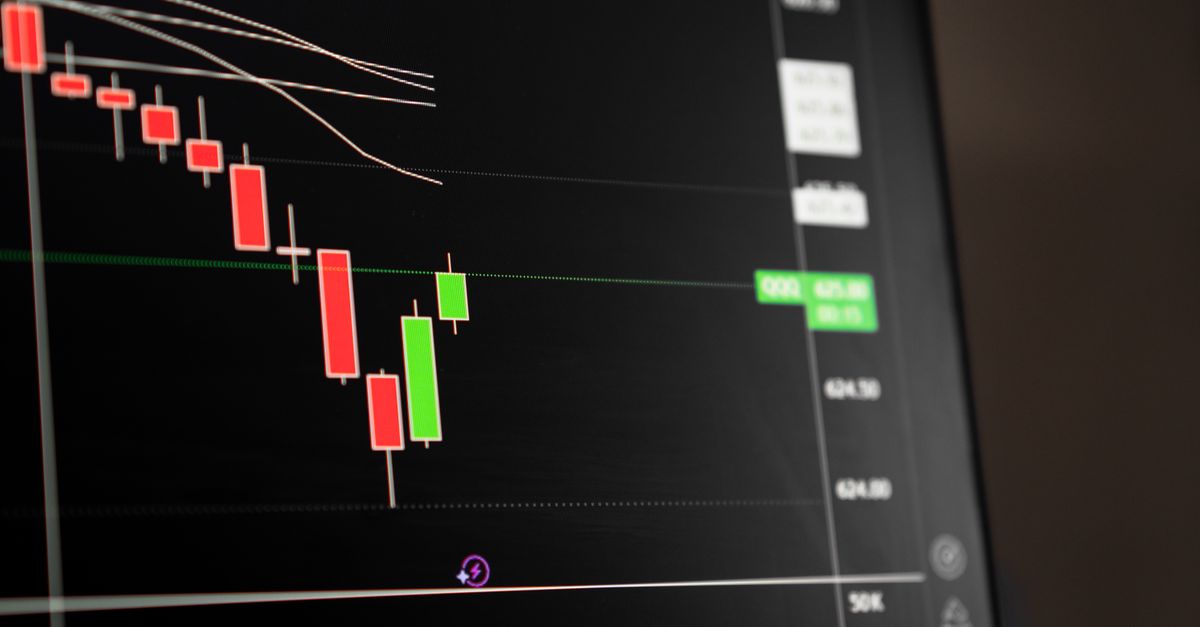
- The 3 bar reversal is a three-candle sequence: a setup bar, an extreme bar that prints the swing high or low, and a confirmation bar that closes back through the setup bar. The confirmation close is the whole pattern. Without it you have nothing.
- Location matters more than the candles. At support, resistance, or a round number the pattern means something. In the middle of a trend it is noise, and it will appear dozens of times a day on low timeframes.
- The stop goes beyond the extreme bar, padded with a fraction of ATR so ordinary noise does not clip it. Entry is on the confirmation close or a stop order just beyond it.
- It fails routinely against strong trends and in dead ranges. Treat it as an entry trigger inside a bigger plan, never as a standalone system.
The 3 bar reversal pattern is a three-candle price action setup that flags a potential turning point when the middle bar prints the most extreme high or low of the sequence and the third bar closes back through the first. That is the whole idea, and unlike a lot of candlestick lore it is mechanical enough to write down as rules. Below: the exact structure, the long and short rules, where it earns its keep on a MetaTrader 4 chart, and where it falls apart. I have traded variations of this setup for over two decades, so you will get the honest version, not the highlight reel.
What Is the 3 Bar Reversal Pattern?
Strip the name away and you are looking at a simple story told in three candles. The market pushes in one direction, stretches to a new extreme, and then snaps back hard enough to close beyond where the push began. Each bar has a job, and names are easier to teach than numbers.
- Bar 1, the setup bar. A directional candle moving with the existing swing. In a bullish reversal this is a down bar, ideally closing near its low. It shows the sellers still in control.
- Bar 2, the extreme bar. This candle prints the lowest low (for longs) or highest high (for shorts) of the three. It is the overshoot, the final stretch. Its color barely matters. What matters is that its extreme holds.
- Bar 3, the confirmation bar. The candle that changes the story. For a bullish pattern it must close above the high of Bar 1. Not touch it. Close above it. That close proves buyers did not just pause the decline, they reversed the entire three-bar range.
The bearish version is the mirror image: an up setup bar, an extreme bar with the highest high, and a confirmation bar closing below the setup bar’s low. If you want the textbook grounding on why reversal structures like this matter, Investopedia’s primer on reversals covers the general logic well. The 3 bar version is one of the cleanest ways to define a reversal objectively, because every rule references a specific price on a specific candle. No squinting at whether a wick is “long enough.”
What Are the Exact Rules for Longs and Shorts?
Here is the full rule set side by side. Write it out by hand once; every rule is a comparison between two specific prices, so you can verify a signal in seconds without any interpretation.
| Element | Bullish 3 bar reversal (long) | Bearish 3 bar reversal (short) |
|---|---|---|
| Bar 1 (setup) | Down candle, close in the lower third of its range | Up candle, close in the upper third of its range |
| Bar 2 (extreme) | Lowest low of the three bars | Highest high of the three bars |
| Bar 3 (confirmation) | Closes above the high of Bar 1 | Closes below the low of Bar 1 |
| Entry | At the Bar 3 close, or buy stop just above its high | At the Bar 3 close, or sell stop just below its low |
| Stop loss | Below the Bar 2 low, plus a small ATR buffer | Above the Bar 2 high, plus a small ATR buffer |
| Best location | At support, a round number, or a prior swing low | At resistance, a round number, or a prior swing high |
Entry: close or breakout, pick one and stay consistent
Entering at the confirmation close gets the better price. A stop order beyond Bar 3 costs a few pips but demands the market keep moving your way before you are in. On the 1-hour charts I trade most, I take the close; on anything faster I want the stop order, because fast charts produce confirmation bars that immediately die.
Stop placement: respect the extreme bar
The extreme bar defines the pattern’s failure point. If price trades back through that extreme, the reversal thesis is simply wrong. So the stop belongs beyond the Bar 2 extreme, and I pad it with half of the current 14-period ATR so a routine wick cannot take me out. A stop placed exactly at the extreme low gets hunted; give it room to breathe and size the position down accordingly. For managing the trade after entry, a volatility trail works better than a fixed target in my experience, and I cover my preferred tool in my chandelier exit indicator guide.
Targets: structure first, ratios second
I aim for the next obvious structural level, the prior swing high for longs or swing low for shorts. If that level offers less than roughly one and a half times my risk, I skip the trade entirely. Plenty of valid patterns are not worth taking because the room is not there; passing on them is a skill, not a loss.
Where Does the 3 Bar Reversal Work Best?
A 3 bar reversal in the middle of nowhere is a coin flip dressed up as a signal. The same three candles printed at a level where buyers or sellers have a reason to defend become a genuinely useful trigger. Location first, pattern second, always.
The locations I trust, in order:
- Horizontal support and resistance. Levels that price has clearly reacted to before, marked on the daily chart in advance. BabyPips has a solid free lesson on drawing these if the skill is new to you.
- Round numbers. The 00 levels on major pairs, the 000 levels on gold and the yen crosses, where orders cluster. A bullish 3 bar reversal whose extreme bar wicks just below 1.0800 on EURUSD and then confirms is a completely different trade from the same candles at 1.0837.
- Prior day’s high and low. Intraday, these two lines attract stop runs, and a stop run followed by a confirmation close back inside the range is exactly what this pattern was designed to catch.
- Higher timeframe agreement. A bullish pattern on the 1-hour chart inside a rising daily trend is trading with the current, not against it. Most of my worst 3 bar trades over the years were technically valid patterns fighting a higher timeframe trend that did not care.
One confirming tool on top of the level is plenty, a momentum read such as RSI diverging at the extreme bar. Five oscillators is not confirmation, it is clutter. I keep pairings that do not echo each other in my guide to forex indicator combinations.
How Do You Trade the 3 Bar Reversal on MT4?

MetaTrader 4 has no built-in scanner for this pattern, and that is fine. The manual routine takes minutes and teaches you more than any alert. Here is the workflow I would hand a newer trader.
- Mark your levels the night before. Daily chart, horizontal lines on the obvious support, resistance, and round numbers. Five lines maximum per pair, or you will find a “level” everywhere.
- Set MT4 price alerts at those lines. Right-click the chart, Trading, then Alert. The platform then watches the levels for you.
- When an alert fires, drop to your trading timeframe and wait for the three-bar sequence to complete. The pattern does not exist until Bar 3 closes. Judging it mid-candle is guessing.
- Enter, set the stop beyond the extreme bar, and leave it alone. The MT4 order ticket lets you attach stop and target in one step; use it.
If you prefer some automation, a candlestick arrow tool can mark the completed pattern for you, and I have written a deeper look at how a good buy sell signal indicator should behave. The one thing I will insist on: whatever tool you pick must not repaint. An arrow that appears two bars late, or quietly deletes itself when the trade fails, will teach you a version of history that never happened. And if you have never loaded a custom tool into the platform before, my walkthrough on how to install an MT4 indicator covers the folder locations for both MT4 and MT5.
Alan’s settings I actually run

People ask for my exact numbers, so here they are, unvarnished. This is what sits on my charts as of 2026, and none of it is exotic.
- Timeframes: 1-hour and 4-hour only. I stopped trading this pattern on the 5-minute chart years ago; it prints constantly and most prints are meaningless.
- Markets: EURUSD, GBPUSD, and gold. Liquid, tight spreads, clean levels. The pattern needs real order flow at the extreme to work, and thin markets do not provide it.
- Setup bar filter: Bar 1 must close in the outer third of its range. A wishy-washy setup bar usually means a wishy-washy reversal.
- Confirmation filter: Bar 3 must close beyond Bar 1 by at least 2 pips on the majors. A close that scrapes over by a fraction of a pip is a technicality, not a statement.
- Stop: Bar 2 extreme plus 0.5 times ATR(14). On 1-hour EURUSD that buffer is usually 4 to 7 pips.
- News rule: no entries in the 30 minutes before a red-folder release on the pair’s currencies. A news candle can print a picture-perfect pattern that has nothing to do with support or resistance.
- Trade management: once price reaches one times my risk, I switch to a Chandelier Exit trail at 22 periods and 3 times ATR and let it take me out. No manual fiddling.
- Risk: a fixed small fraction of the account per trade, identical on every signal. The pattern does not get a bigger bet because it “looks good.”
Notice what is missing: no secret oscillator, no magic number. The edge comes from the location filter and the stop discipline; the pattern is just the trigger with a defined risk point. The same framework applies to most tools on my best MT4 forex indicators list.
Where Does the 3 Bar Reversal Fail? The Honest List for 2026
Every pattern article owes you this section and most skip it. Here is where the 3 bar reversal loses money, in rough order of how often it has cost me.
It gets steamrolled by strong trends. A reversal tool is, by definition, often fading momentum. In a one-way market, EURUSD during a central bank repricing, gold in a panic run, price will print a valid 3 bar reversal, stop everyone in, and resume the trend within a couple of candles. The higher timeframe filter exists precisely because of this, and it still will not catch every case.
It drowns you in signals on fast charts. On a 5-minute chart the three-bar structure completes dozens of times per session, and almost all of those prints are ordinary noise. Take every one and you will bleed out on spreads and small stops.
Dead ranges produce technically valid junk. During the Asian session lull, an “extreme bar” may exceed its neighbours by two pips. The rules pass, the meaning does not. I require the three-bar range to be at least one full ATR before I consider the pattern real.
The confirmation bar can be enormous. Sometimes Bar 3 is a huge news candle, and by the time it closes beyond the setup bar your entry is far from the extreme, which stretches the stop distance and wrecks the trade’s geometry. Passing on those is correct.
It carries no inherent edge on its own. Backtest the raw pattern across every bar of a year and you will find it performs about like chance. The candles only become worth trading when they fire at a level where other participants have reasons to act. Anyone selling you the pattern alone as a system is selling you a coin.
Frequently Asked Questions
Is the 3 bar reversal the same as the morning star pattern?
They are cousins, not twins. The morning star focuses on candle bodies: a large down body, a small-bodied middle candle, then a large up body. The 3 bar reversal is defined by highs, lows, and one specific close, which makes it stricter and easier to verify mechanically. A single sequence can qualify as both, but plenty of morning stars never produce the confirmation close the 3 bar reversal demands.
What timeframe is best for the 3 bar reversal pattern?
The 1-hour chart and above, in my experience. Higher timeframes produce fewer patterns, but each one reflects more genuine order flow, and the levels they form at are watched by more participants. On 1-minute and 5-minute charts the structure completes constantly and most prints are noise, so the rules stop filtering anything meaningful.
Does the 3 bar reversal work in Forex as well as it does in stocks?
The structure is market-agnostic because it describes crowd behaviour at an extreme, and that behaviour shows up in any liquid market. Forex adds one wrinkle: there are no true opening gaps during the week, so versions of the pattern that rely on gaps translate poorly. Stick to the high, low, and close rules and it reads the same on EURUSD as on an index or a stock.
Is there a 3 bar reversal indicator for MT4?
MetaTrader 4 ships with nothing built in, but custom pattern tools exist that draw an arrow when the third bar closes and confirms. The non-negotiable requirement is that the arrow must appear at the confirmation close and never repaint afterward. Test any candidate on a demo chart and watch live candles for a session before trusting it, and see my notes on non-repaint arrow indicators for exactly how to check.
Want a clean indicator to install right now?
It is my own enhanced DeMARK Trend Line indicator for MetaTrader 4 and 5. Non repaint, clean, and free.
{“@context”:”https://schema.org”,”@type”:”FAQPage”,”mainEntity”:[{“@type”:”Question”,”name”:”Is the 3 bar reversal the same as the morning star pattern?”,”acceptedAnswer”:{“@type”:”Answer”,”text”:”They are cousins, not twins. The morning star focuses on candle bodies: a large down body, a small-bodied middle candle, then a large up body. The 3 bar reversal is defined by highs, lows, and one specific close, which makes it stricter and easier to verify mechanically. A single sequence can qualify as both, but plenty of morning stars never produce the confirmation close the 3 bar reversal demands.”}},{“@type”:”Question”,”name”:”What timeframe is best for the 3 bar reversal pattern?”,”acceptedAnswer”:{“@type”:”Answer”,”text”:”The 1-hour chart and above, in my experience. Higher timeframes produce fewer patterns, but each one reflects more genuine order flow, and the levels they form at are watched by more participants. On 1-minute and 5-minute charts the structure completes constantly and most prints are noise, so the rules stop filtering anything meaningful.”}},{“@type”:”Question”,”name”:”Does the 3 bar reversal work in Forex as well as it does in stocks?”,”acceptedAnswer”:{“@type”:”Answer”,”text”:”The structure is market-agnostic because it describes crowd behaviour at an extreme, and that behaviour shows up in any liquid market. Forex adds one wrinkle: there are no true opening gaps during the week, so versions of the pattern that rely on gaps translate poorly. Stick to the high, low, and close rules and it reads the same on EURUSD as on an index or a stock.”}},{“@type”:”Question”,”name”:”Is there a 3 bar reversal indicator for MT4?”,”acceptedAnswer”:{“@type”:”Answer”,”text”:”MetaTrader 4 ships with nothing built in, but custom pattern tools exist that draw an arrow when the third bar closes and confirms. The non-negotiable requirement is that the arrow must appear at the confirmation close and never repaint afterward. Test any candidate on a demo chart and watch live candles for a session before trusting it.”}}]}

Forex educator and indicator developer. I build and trade my own MetaTrader tools, and share the ones that genuinely help.
what about crypto pairs? seems like the same logic should apply but there arent really sessions, curious if the asian lull filter still matters
Thanks for the ATR buffer tip on the stop. I always placed mine right at the low and kept getting wicked out before the move.
Quick question, do you judge the extreme bar on wicks or closes? I have seen both versions taught and it changes which signals qualify.
Been trading a version of this for years and the point about location is spot on. The pattern alone never did much for me until I started waiting for round numbers.